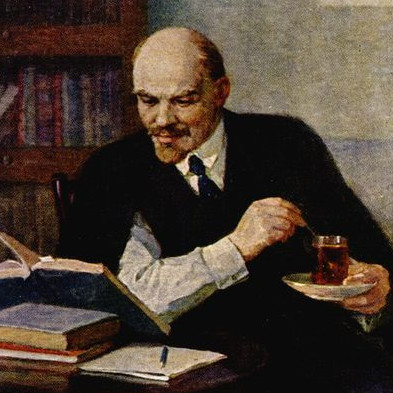
Millions of proletarians will repeat our words: “Long live the memory of Comrade Sverdlov. At his graveside we solemnly vow to fight still harder for the overthrow of capital and for the complete emancipation of the working people… .”

  • 3 Posts
  • 23 Comments
Joined 5 months ago
cake
Cake day: October 1st, 2025

help-circle


  • Academics call the Great Divergence not the suddenly europe became relevant.

    Great Divergence’s traditional interpretation has been fundamentally challenged and refined by new data . New data shows that, the most advanced parts of Eurasia (the Yangzi Delta in China, Japan, parts of India) were on par with Western Europe in terms of standards of living, commercial sophistication, and agricultural productivity as late as 1750. There was no inherent European superiority. The divergence was not caused by earlier European superiority, but by contingent factors: access to New World resources (especially land-intensive products like sugar, cotton, and, crucially, silver) and readily accessible fossil fuels (British coal) that alleviated ecological constraints Asia still faced.

    I’m not going into details more about euro-centrism and exceptionalism of the theory. Another issue is that the most advanced country was the UK it’s not the whole of the Europe. For example, Germany was a backward country until 1880s. We know how much Engels & Marx complained about the Germany’s backwardness philosophically, and politically.

    I would suggest you to read Marxian historian Andre Gunder Frank. As a ML and historical materialist, Andre Gunder Frank is the most correct analysis on capitalism and why ‘Great Divergence’ is irrelevant now. We should focus on Great Convergence.

    According to him, when viewed over the long period of history, Asian economies have always been superior. European supremacy in the 19th century was a short-term deviation brought about by industrial capitalism. Asia’s resurgence in the 21st century is actually a return to the historical norm (“Great Convergence”).

    This view supports Kenneth Pomeranz’s thesis (which emphasizes similar geographical and ecological factors) but is more radical than his. Frank argues that Europe never had any inherent superiority, but only managed to integrate into Asia’s trade network thanks to the enormous transfer of resources (silver) that came with the conquest of the Americas, and that it gradually took control of this system.