

- 22 Posts
- 22 Comments


How can I send you my money??
Image credit to @AllNewTypeSpace@leminal.space
The Rim of Morning, Two Tales of Cosmic Horror by William Sloane.
In the 1930s, William Sloane wrote two brilliant novels that gave a whole new meaning to cosmic horror. In To Walk the Night, Bark Jones and his college buddy Jerry Lister, a science whiz, head back to their alma mater to visit a cherished professor of astronomy. They discover his body, consumed by fire, in his laboratory, and an uncannily beautiful young widow in his house—but nothing compares to the revelation that Jerry and Bark encounter in the deserts of Arizona at the end of the book. In The Edge of Running Water, Julian Blair, a brilliant electrophysicist, has retired to a small town in remotest Maine after the death of his wife. His latest experiments threaten to shake up the town, not to mention the universe itself.

The Green Man by Kingsley Amis.
Maurice Allington has reached middle age and is haunted by death. As he says, “I honestly can’t see why everybody who isn’t a child, everybody who’s theoretically old enough to have understood what death means, doesn’t spend all his time thinking about it. It’s a pretty arresting thought.” He also happens to own and run a country inn that is haunted. The Green Man opens as Maurice’s father drops dead (had he seen something in the room?) and continues as friends and family convene for the funeral.
Maurice’s problems are many and increasing: How to deal with his own declining health? How to reach out to a teenage daughter who watches TV all the time? How to get his best friend’s wife in the sack? How to find another drink? (And another.) And then there is always death.
The Green Man is a ghost story that hits a live nerve, a very black comedy with an uncannily happy ending: in other words, Kingsley Amis at his best.
The Black Spider by Jeremias Gotthelf.
It is a sunny summer Sunday in a remote Swiss village, and a christening is being celebrated at a lovely old farmhouse. One of the guests notes an anomaly in the fabric of the venerable edifice: a blackened post that has been carefully built into a trim new window frame. Thereby hangs a tale, one that, as the wise old grandfather who has lived all his life in the house proceeds to tell it, takes one chilling turn after another, while his audience listens in appalled silence. Featuring a cruelly overbearing lord of the manor and the oppressed villagers who must render him service, an irreverent young woman who will stop at nothing, a mysterious stranger with a red beard and a green hat, and, last but not least, the black spider, the tale is as riveting and appalling today as when Jeremias Gotthelf set it down more than a hundred years ago. The Black Spider can be seen as a parable of evil in the heart or of evil at large in society (Thomas Mann saw it as foretelling the advent of Nazism), or as a vision, anticipating H. P. Lovecraft, of cosmic horror. There’s no question, in any case, that it is unforgettably creepy.
I just found a website for some similar data. If you know of one, I’d love to know the name.
 2·3 months ago
Would you say 3k subscribers and 1k monthly users is a big amount?
I genuinely dont know what to classify as big
Yeah I mod like 10 communities and I feel wrong doing it. Dont think I’ll ever be checking that again.
Understandable
Ive actually anyways liked the idea of having net votes
Yeah that’s fair enough. Better everyone sees it than just a few ig?
I know, was a big thing on lemmy.dbzer0.com but. I’d rather get rid of downvotes than have them be so public
Thats what I’ve always heard.
And you’re right, I just stumbled into this by mistake, didn’t intend to, wasn’t looking for it, it was just right there.
Being so in your face is basically the equivalent of being there for the first time for someone as tech illiterate as I am.

Joe is biden his time
Found the pic that way.





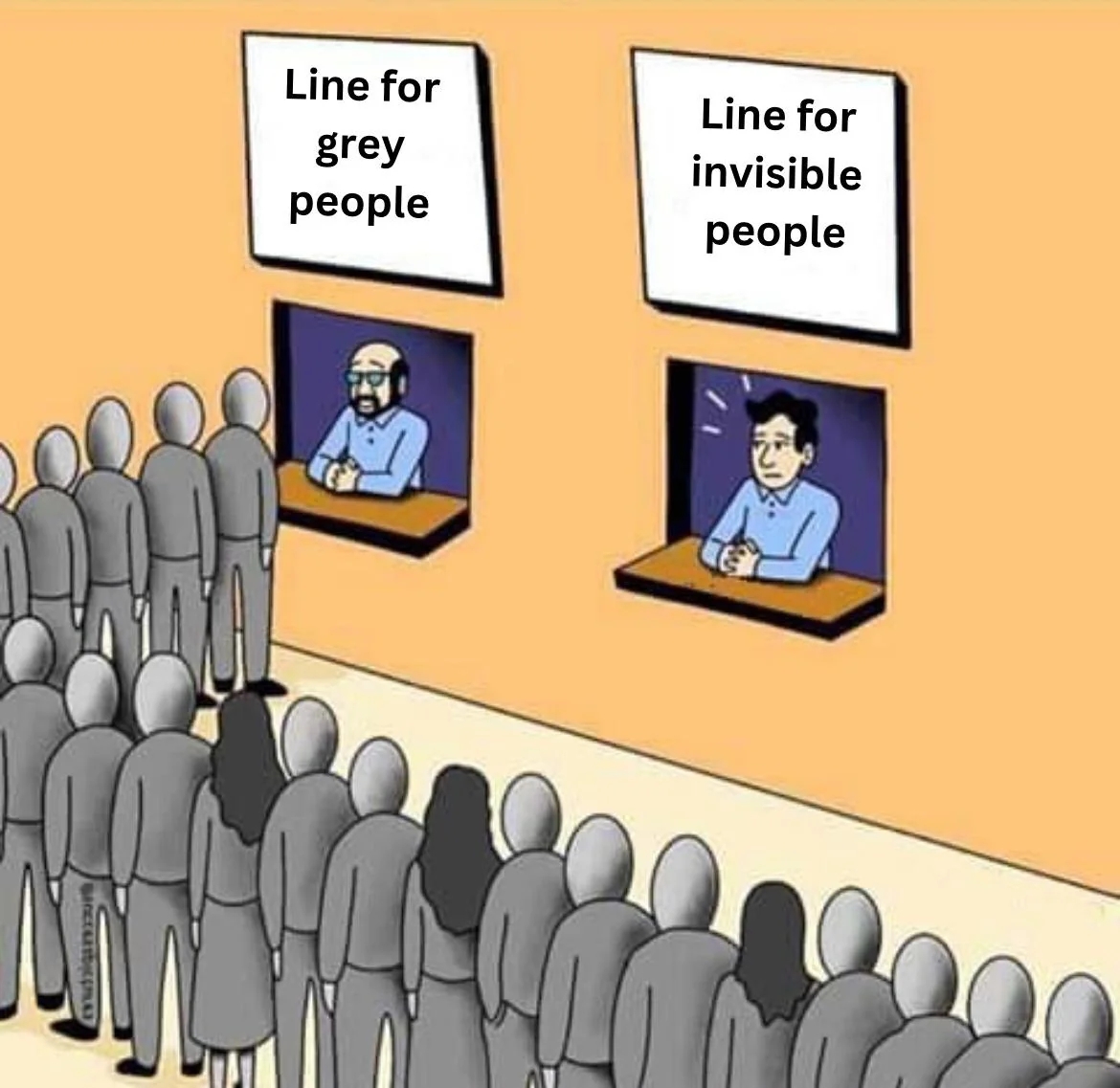






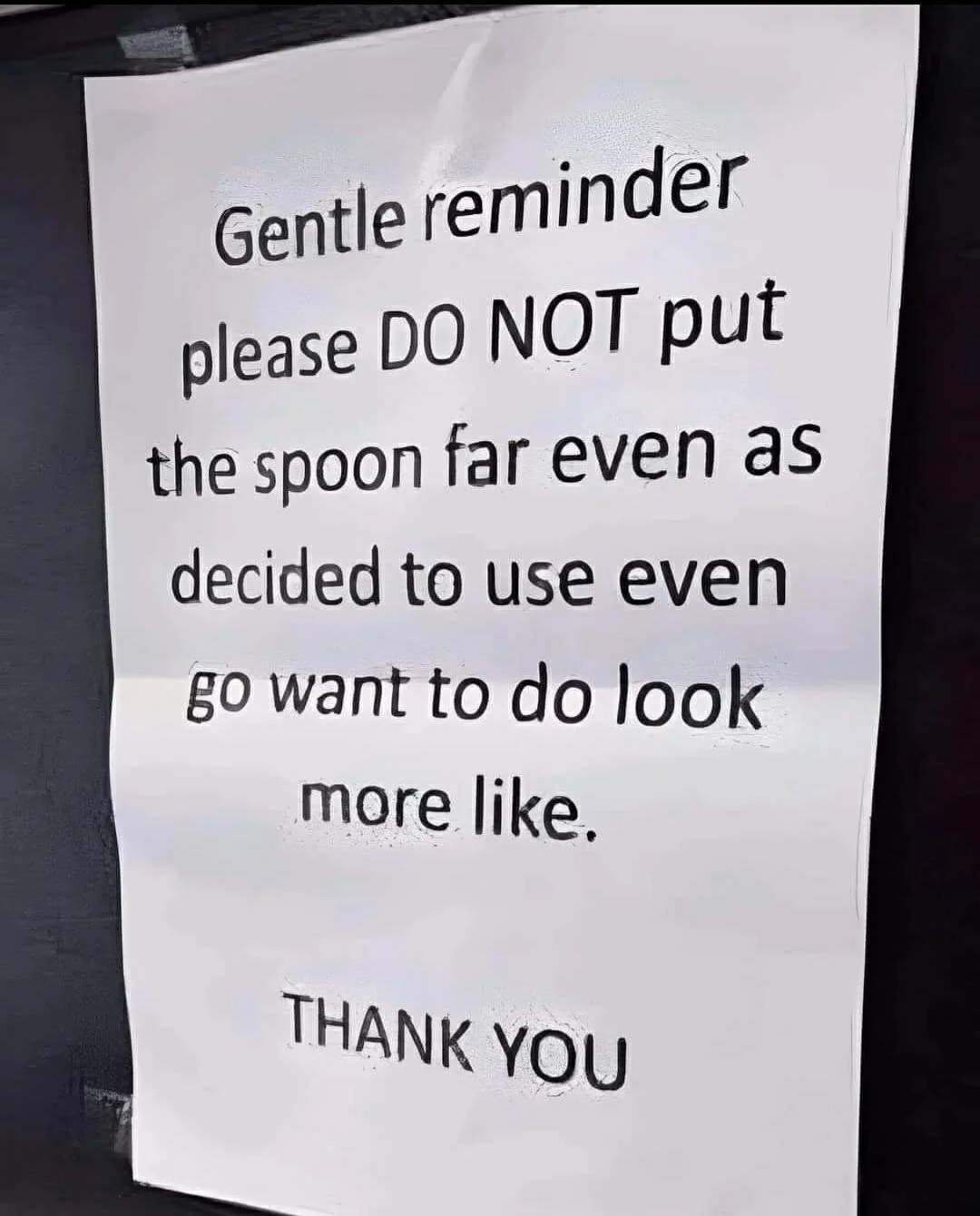



I have definitely been personally victimised by honk



I’m posting some local art by upcoming artists you’ll probably never see elsewhere over on !visualarts@lemmy.dbzer0.com