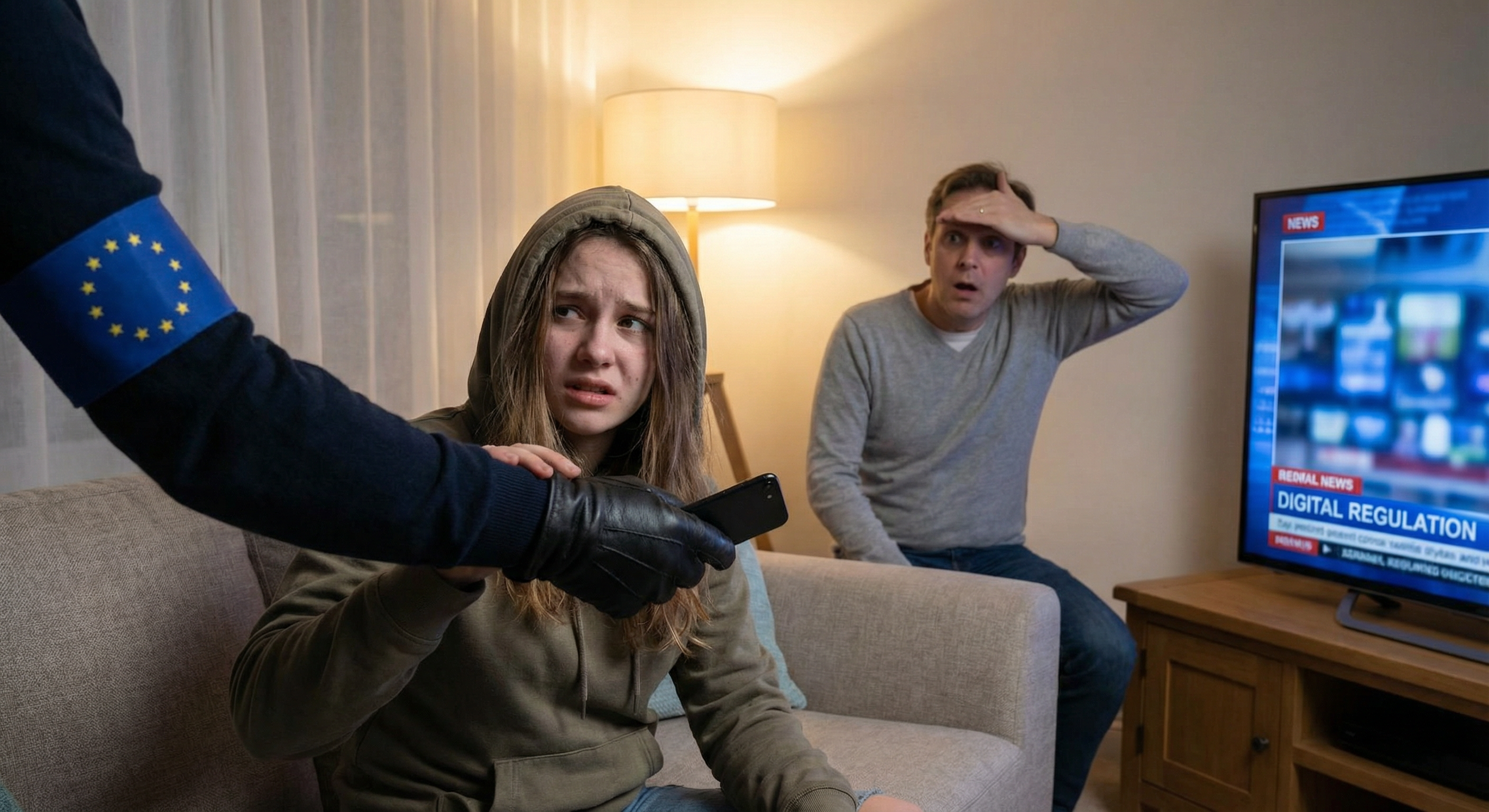
Of all people, it is center-right parties in Brussels that are supporting plans for the mass screening of private messages. The proposal cuts deep into civil liberties. The consequences for chats between teenagers and their own parents are particularly drastic.
The battle over "chat control" and


I’m not saying that I’d like to have to use this but if push comes to shove: encrypt your plain-text with aes256.
Example text:
FKZOMTF39EgMbw+Zdzqr1zEIpW6iCQBy7IfxZLHcmTzhqmpMgwdOdZhD30JrY89y
Password: 1234
Decrypted text: test
What PBKDF did you use and how is the IV included with the ciphertext?
Used the programme “DroidCrypt” from F-Droid.
DroidCrypt uses scrypt with N=32768 r=16 p=4 as PBKDF, and AES-256 in GCM mode with tag-length of 128 bits. The ciphertext is output as:
+------------------------+-----------------------+-------------------------
| scrypt salt (16 bytes) | AES-GCM IV (12 bytes) | ciphertext (N bytes) ...
+------------------------+-----------------------+-------------------------
and base64 encoded.
Your recipient would need to know all of these details to be able to decrypt the text (or use the same app) which is why cryptography is a bit more complicated than just “encrypt it with aes256.”