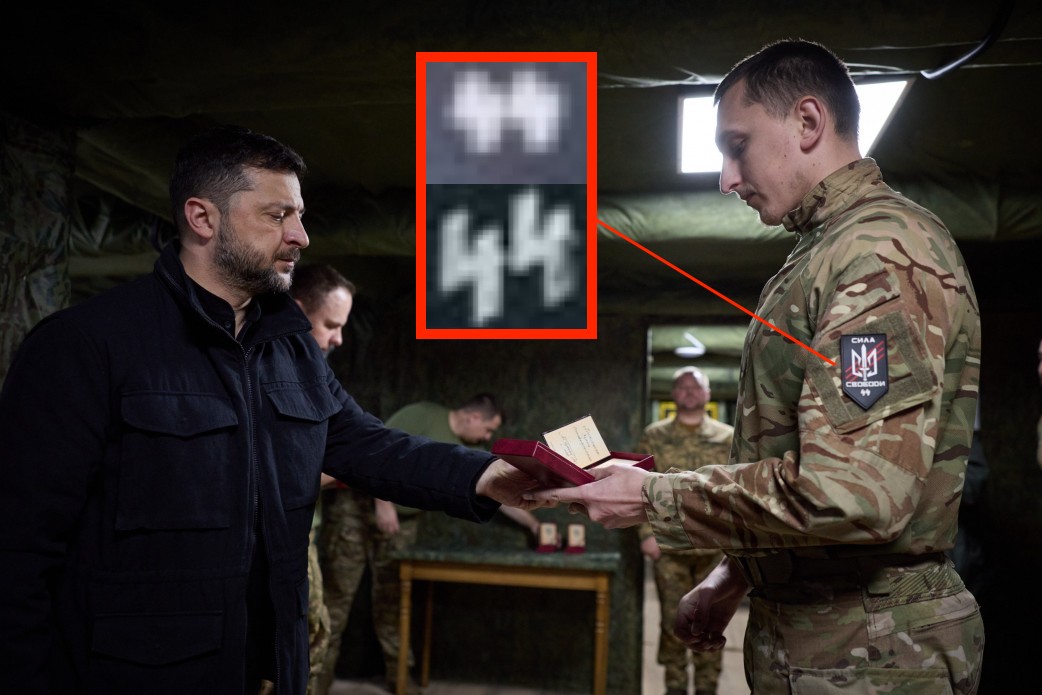
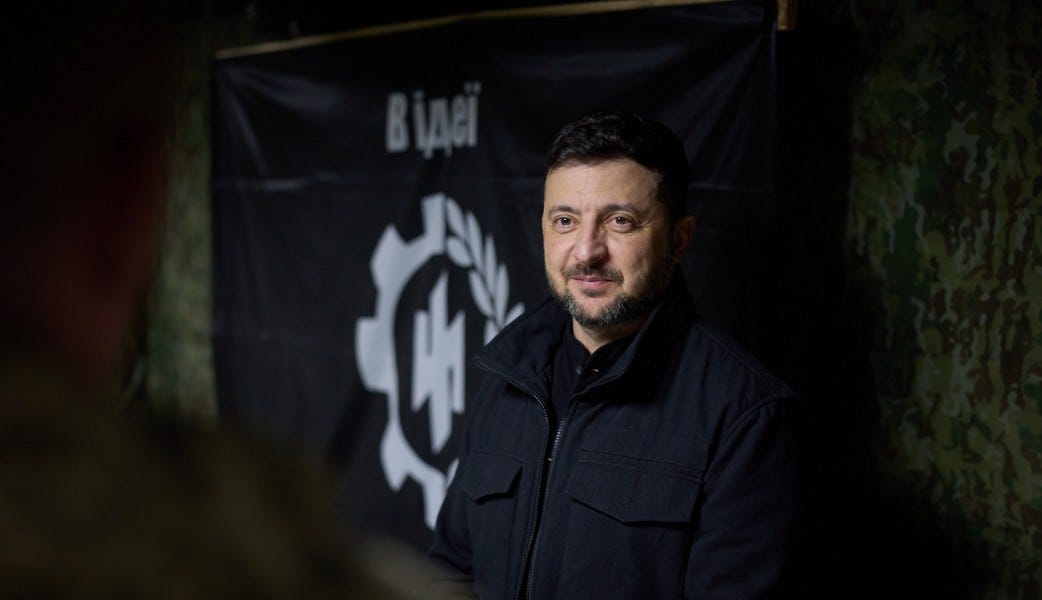
This year’s “corps reform” in the National Guard of Ukraine (NGU) elevated the 12th Azov and 13th Khartia brigades, which still exist within the larger units. It was the 4th Rubizh brigade that Zelensky visited from the 2nd NGU corps, another “elite” unit, which has two battalions (3rd and 4th) affiliated with the far-right political party “Svoboda.” Upon closer inspection, the “SS” troops were “trolling.” Their chevrons did not contain Nazi runes but a stylized 44, as in “4th brigade, 4th battalion,” as well as the fascist “44 Rules of Life of a Ukrainian Nationalist” from the 1930s.
The prevalence of soldiers from this “SS” battalion at the ceremony, and a neo-Nazi (“social-nationalist”) flag prominently displayed at the Rubizh command post, obviously raises some questions about the brigade, which was “established as an elite unit trained and organized under NATO standards.” The Azov and Khartia brigades also pride themselves on training according to NATO standards, “to be a model” for a “new Ukrainian army” liberated from the “Soviet-era mindset.”
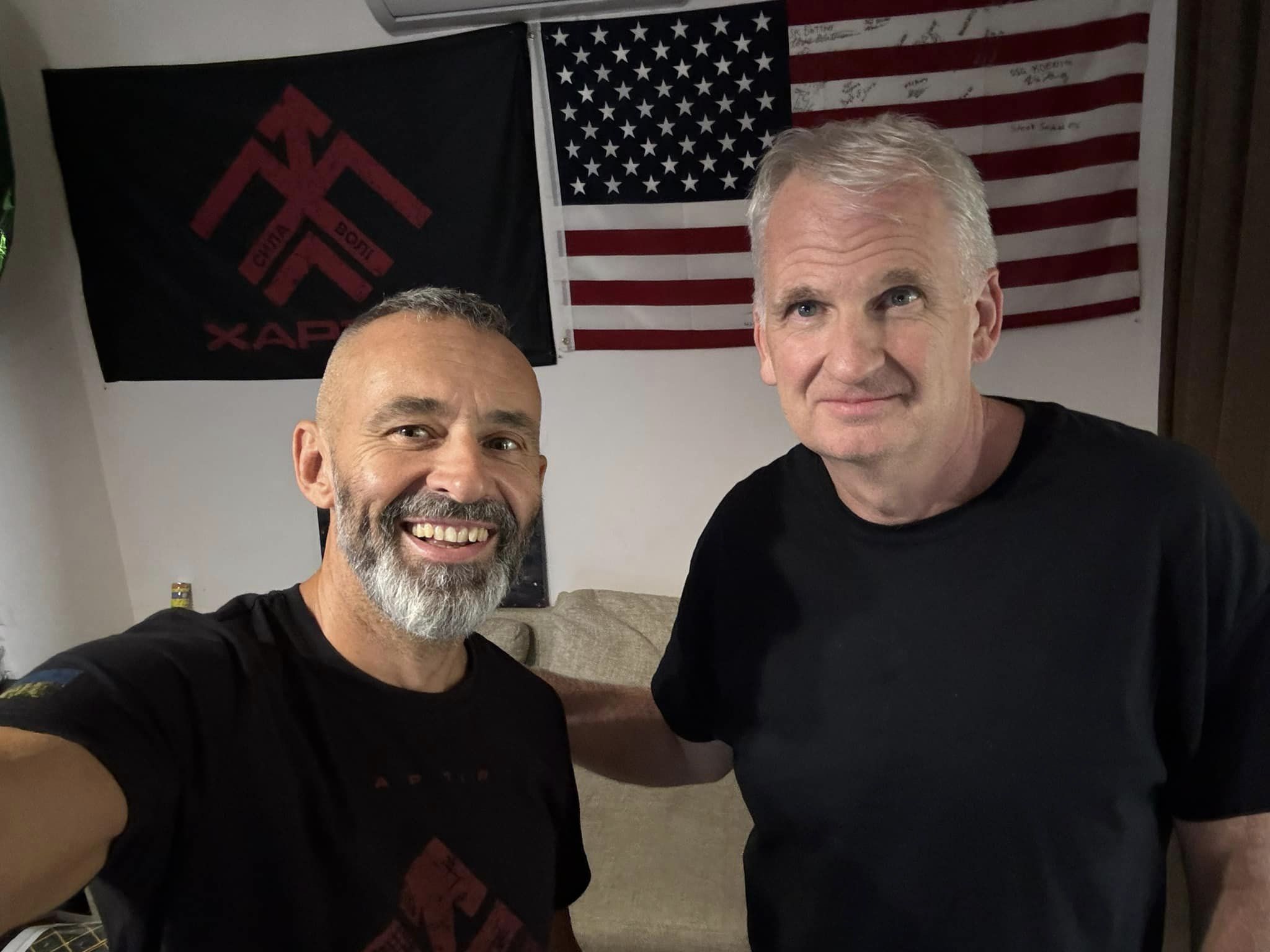
The famous historian Timothy Snyder is helping “pro-Ukraine” internet trolls to fundraise for Rubizh and other brigades of the 2nd NGU corps, including one which has a symbol that creates the visual impression of a swastika. But it’s the PR-driven Khartia brigade that appears to be Snyder’s favorite—a watered-down Azov copycat unit, led by a former Rubizh commander who quotes 20th century Ukrainian fascists. International volunteers have called it “the worst brigade,” but in another sense, it is an elite unit, founded by an oligarch who is “convinced the key to success is ‘radical’ reform of Ukraine’s military.”
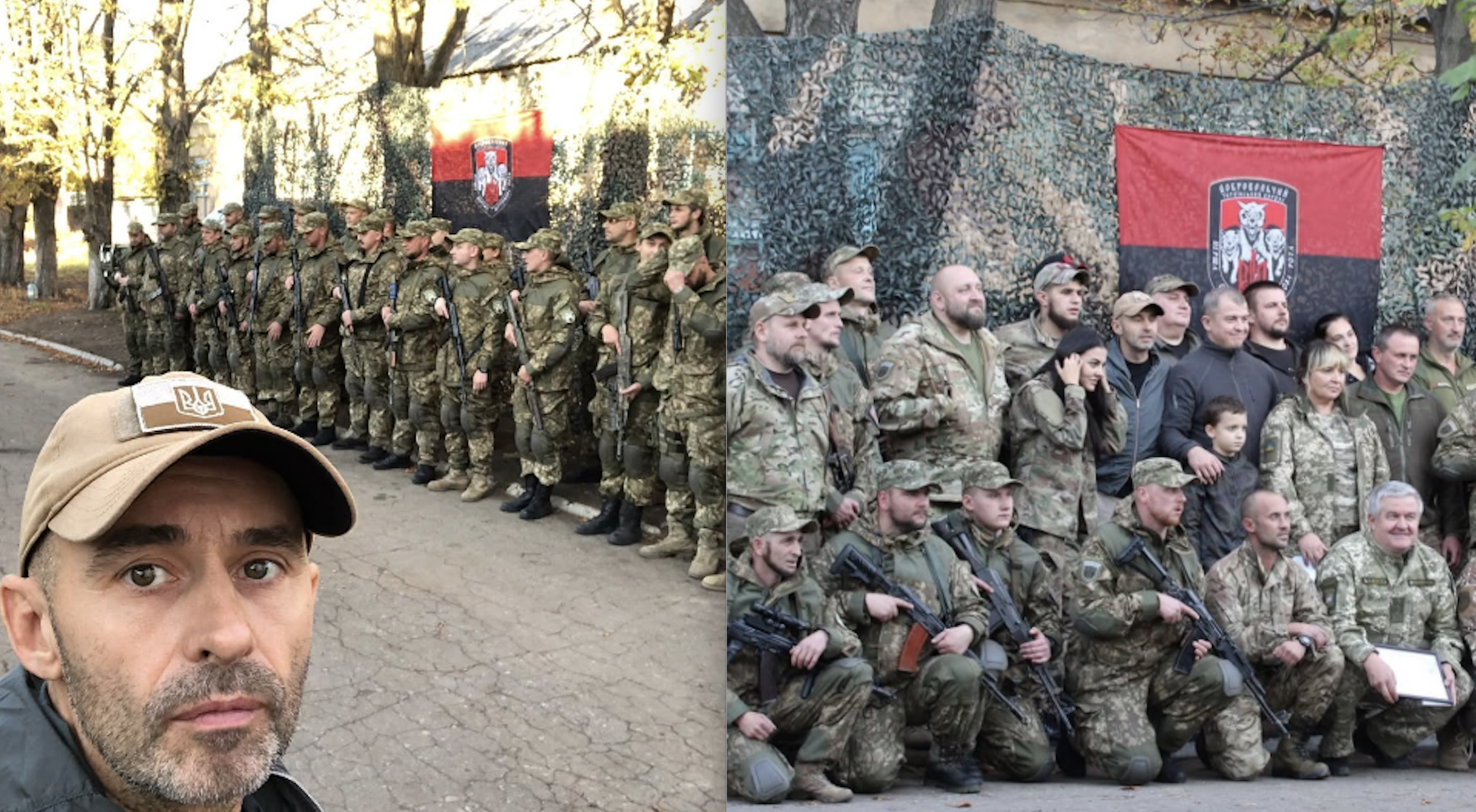
The Azov movement has its “White Fuhrer” (Andriy Biletsky), and Khartia has Vsevolod Kozhemyako, the founder and CEO of Agrotrade Group, “one of Ukraine’s largest grain production, storage and export companies.” In 2003, he received a degree from the Interregional Academy of Personnel Management, a private university in Kyiv that the historian Per Rudling wrote about in 2006 as a pillar of organized antisemitism in Ukraine. Now a proud nationalist who praises the memory of Stepan Bandera, even before 2022, Kozhemyako appears to have been a supporter of the “Da Vinci Wolves,” a far-right militia affiliated with the [neofascist]-infested “Right Sector” movement.
Whereas the Azov units originated in an infamous volunteer battalion from 2014 and the NGU Azov Regiment made famous by the Russian siege of Mariupol, Khartia has also become “one of Ukraine’s most famous units” and much more quickly expanded, thanks to its unique financing and PR. This year, the country’s largest oil and gas producer, Ukrnafta, raised 100 million hryvnia (~$2.4 million) for the Khartia Corps. Just a year after Kozhemyako formed a territorial defense unit in March 2022, it joined the National Guard as a brigade. According to Forbes Ukraine,
If we describe Kozhemyako’s role at Khartia in business terms, he is an executive chairman, a founder who has moved away from operational management and focused on strategic interactions with the government, key partners, suppliers, and thought leaders. His interlocutors include [Ukrainian writer/singer] Serhiy Zhadan and Howard Buffett, [Ukrainian singer/politician] Slavko Vakarchuk and [former CEO of Google] Eric Schmidt, generals and deputy prime ministers, owners and managers of private companies with revenues in the hundreds of millions of dollars.
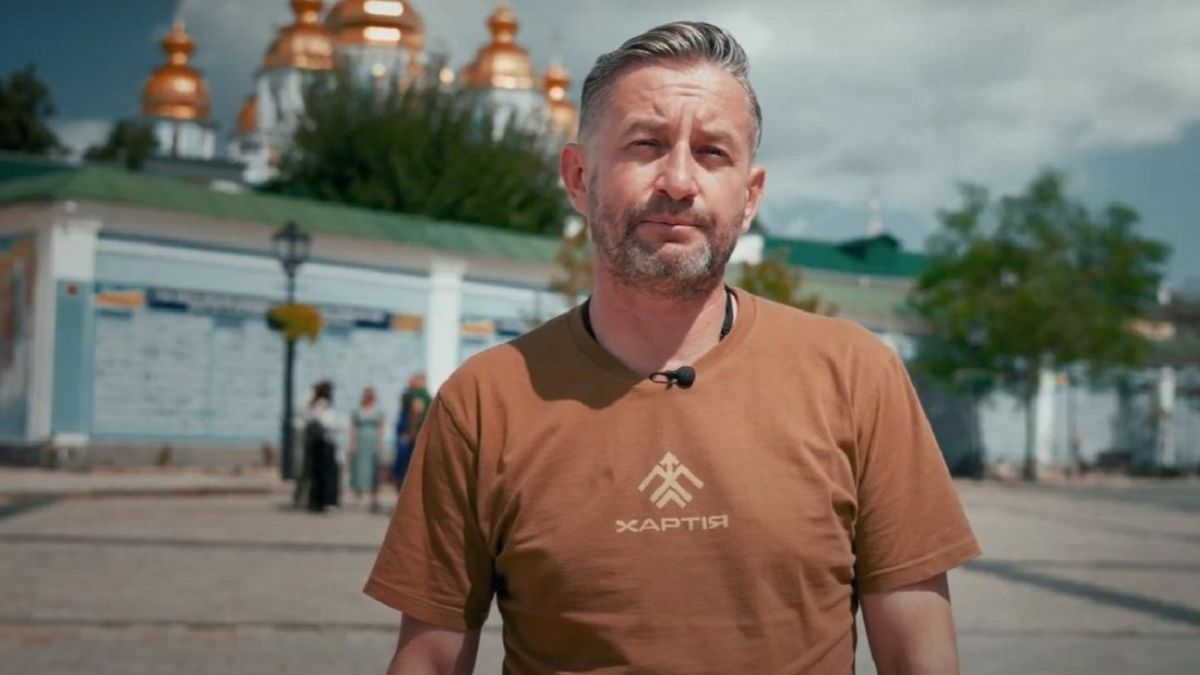
Serhiy Zhadan, a famous poet in Ukraine, is a friend of Vsevolod Kozhemyako and the most prominent “culture warrior” in Khartia, who represents the unit publicly (and even wrote its anthem) but doesn’t actually fight. As “Events in Ukraine” tells us, “This phenomenon of culture-warriors is particularly widespread in the 13th ‘Khartiya’ brigade of the 2nd Corps of the National Guard.”
Khartia is supported by a high-level marketing agency in Ukraine, the Fedoriv Group, which started to work with the Ministry of Digital Transformation in 2022, and launched the wartime United24 fundraising platform and media brand on behalf of the Office of the President. Andriy Fedoriv became a “great friend for me and Khartia” says Kozhemyako. “He helped me build a creative team within Khartia, and then worked with us and continues to work on creating and promoting the brand.”